
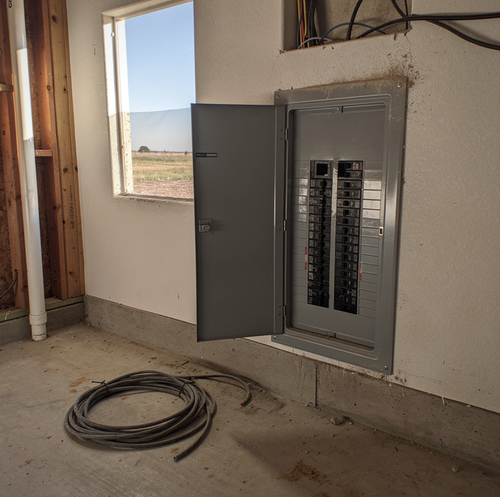
Quick Answer: Whether you need a panel upgrade to add an EV charger depends on your panel's available capacity and everything else your home draws. A Level 2 EV charger is a large, continuous load, and if your panel is already near its limit — common with smaller or older panels running central air and electric appliances — adding the charger may require an upgrade to handle it safely. A panel with spare capacity may accommodate the charger without an upgrade. The only reliable way to know is a load calculation by an electrician, which tallies your existing loads plus the charger against your panel's capacity. In some cases, load management devices can let a charger share capacity, avoiding an upgrade.
Installing a home EV charger is a great convenience, but it raises a practical question: can your electrical panel handle it, or do you need an upgrade first? A Level 2 charger is a significant electrical load, so the answer depends on your specific panel and home. Understanding how the charger's demand fits into your panel's capacity helps you plan the installation correctly.
An EV Charger Is a Big, Continuous Load
The key thing to understand is that a Level 2 home EV charger draws a large, continuous load while charging — much more than typical household devices, and sustained over hours. That substantial draw has to fit within your panel's capacity alongside everything else your home uses. So adding an EV charger meaningfully increases your home's electrical demand, and whether your panel can handle that increase is the central question. It's not just whether the panel can power the charger in isolation, but whether it can supply the charger plus the rest of the home's loads without exceeding its capacity.
It Comes Down to Available Capacity
Your panel has a total capacity — the maximum current it can supply at once — and your existing loads use some portion of that. Whether you can add an EV charger depends on how much spare capacity remains after accounting for everything else: central air, electric appliances, and the rest of the home. If your panel has ample unused capacity, it may accommodate the charger without an upgrade. If your panel is already near its limit — which is common with smaller or older panels, especially running central air and electric appliances — adding the charger's large load may exceed the capacity, requiring an upgrade. So the answer hinges on your available capacity, which varies from home to home.
| Your situation | Likely outcome |
|---|---|
| Panel has ample spare capacity | May add charger without upgrade |
| Panel near its limit | Upgrade may be needed |
| Smaller/older panel, heavy loads | Upgrade commonly needed |
| Larger panel, modest other loads | Often has room |
| Uncertain | Needs a load calculation |
Why Older and Smaller Panels Often Need an Upgrade
Many homes, especially older ones, have panels sized for the loads of past decades. Adding a large, modern load like an EV charger can push such a panel beyond what it can safely supply, particularly when paired with central air and electric appliances. So homes with smaller or older panels often need an upgrade to safely add EV charging, while homes with larger panels and spare capacity may not. Signs that your panel is already near its limit — like frequent breaker trips, a full panel, or being an older or smaller service — make an upgrade more likely. This is a common scenario as households electrify: the panel that ran the home fine wasn't sized for EV charging on top of everything else.
How to Know for Sure: A Load Calculation
The reliable way to determine whether you need a panel upgrade is to have an electrician perform a load calculation. This tallies your home's existing loads and the planned EV charger, then compares the total against your panel's capacity to determine whether your current panel can handle the addition or needs upgrading. It replaces guesswork with an actual answer based on your specific home. Rather than assuming, the load calculation tells you definitively. And because both adding the charger's dedicated circuit and upgrading a panel involve the home's main electrical service, this is work for a licensed electrician, properly permitted and inspected.
Before installing an EV charger, have the load calculation done first. Finding out whether your panel can handle the charger — or needs an upgrade — before the work begins lets you plan the project and budget correctly, rather than discovering mid-installation that an upgrade is required.
Alternatives and the Bigger Picture
It's worth knowing that an upgrade isn't always the only option. In some situations, load management devices can allow a large load, such as an EV charger, to share capacity with other loads, avoiding the need to upgrade the panel. Whether that's an option for your home depends on your specific loads and panel. An electrician can assess whether load management or a panel upgrade is the right approach. It's also worth thinking ahead: if you're planning other electrical additions (like a heat pump), factoring those in along with the EV charger helps size any upgrade for your future needs, not just today's. The goal is a setup that powers your charger safely and reliably, whether that means using existing capacity, load management, or upgrading the panel.
Frequently Asked Questions
It depends on your panel's available capacity. A Level 2 EV charger is a large, continuous load, and if your panel is near its limit — common with smaller or older panels running central air and electric appliances — adding the charger may require an upgrade. A panel with ample spare capacity may accommodate it without one. A load calculation by an electrician gives the definitive answer for your home.
Through a load calculation by an electrician, which tallies your existing loads plus the planned EV charger and compares the total against your panel's capacity. This determines whether your current panel can handle the addition or needs upgrading. It's a reliable method rather than guessing based on your panel's size or age. Having it done before installation lets you plan the project correctly.
Older, smaller panels were often sized for the loads of past decades, and a large modern load, like an EV charger, can push them beyond what they can safely supply, especially alongside central air and electric appliances. So homes with smaller or older panels frequently need an upgrade to add EV charging safely. Signs the panel is near its limit, like frequent trips or a full panel, make an upgrade more likely.
Sometimes. If your panel has enough spare capacity, it may accommodate the charger without an upgrade. And in some cases, load management devices can let the charger share capacity with other loads, avoiding an upgrade. Whether either applies depends on your panel and loads. A load calculation and an electrician's assessment determine if your existing panel can handle the charger as-is or with load management.
A licensed electrician. Adding the charger's dedicated circuit and any panel upgrade involves the home's main electrical service, which must be done correctly, permitted, and inspected for safety. The electrician performs the load calculation to determine if an upgrade is needed, then installs the charger and any upgrades properly. Because an EV charger is a large continuous load, professional assessment and installation are important.
It's wise to. If you're planning other additions like a heat pump along with the EV charger, factoring them in helps size any panel upgrade for your future needs rather than just today's. Planning for your full electrification goals up front can avoid upgrading again later. An electrician can account for planned additions in the load calculation and recommend sizing accordingly.
Let a Load Calculation Answer It
Whether you need a panel upgrade for an EV charger comes down to your panel's available capacity against the charger's large, continuous load, plus everything else your home draws. Many smaller or older panels need an upgrade to add charging safely, while panels with spare capacity may not — and load management is sometimes an alternative. The only reliable way to know is a load calculation by an electrician, done before installation, so you can plan the project right.
Planning a home EV charger? — Get a load calculation to find out whether your panel can handle it or needs an upgrade. The Plug Electrical Services serves Corpus Christi, Odem, Portland. Call (361) 282-3058.
