
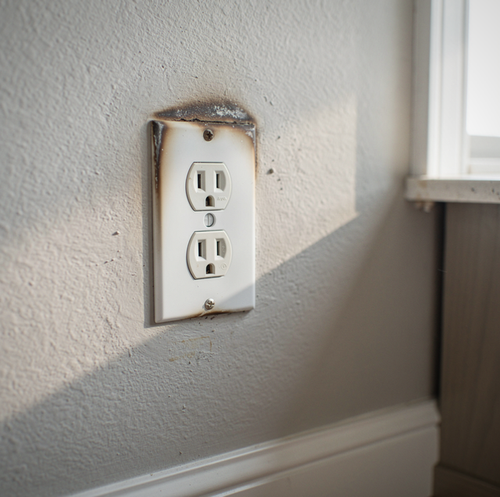
Quick Answer: An outlet that feels warm to the touch or shows scorch marks, discoloration, or melting is a serious safety warning that should not be ignored. It usually means excess heat is building up at the outlet, often from a loose or faulty wiring connection, an overloaded circuit, a worn-out or damaged outlet, or a problem with what's plugged in. That heat is a fire hazard. If you find a warm or scorched outlet, stop using it, unplug what's connected if you can do so safely, switch off the circuit at the breaker, and have an electrician inspect it promptly. A burning smell or smoke is an emergency — disconnect power and call for help.
Most outlets in your home should feel cool or at most room temperature. So an outlet that's warm to the touch — or worse, shows scorch marks, discoloration, or melting — is a clear warning sign that something is wrong. This is one electrical issue you shouldn't put off, because the heat behind it is a genuine fire hazard. Here's what a warm or scorched outlet means and what to do about it.
Outlets Shouldn't Be Warm
Under normal conditions, an electrical outlet doesn't generate noticeable heat. So, when an outlet feels warm or hot to the touch, it indicates that excess heat is building up there — and that the heat must be coming from a problem. Visible signs such as scorch marks, brown or black discoloration around the outlet or its slots, or melted or deformed plastic are even more serious, indicating that significant heat or even arcing has occurred. Both a warm outlet and a scorched one point to the same underlying issue: dangerous heat at the outlet. Recognizing that an outlet should not be warm is the first step to taking the warning seriously.
What Causes the Heat
Several issues can cause an outlet to overheat, and most involve electrical resistance or excess current generating heat. A loose or faulty wiring connection at the outlet is a common culprit — loose connections create resistance, and resistance generates heat, which can build up and scorch the outlet. An overloaded circuit, drawing more current than it should, can cause heat. A worn-out, old, or damaged outlet where the internal contacts have degraded can overheat. And a problem with the device or plug connected — a faulty appliance or a loose plug — can contribute. In all these cases, the result is heat where there shouldn't be any, which is what makes a warm or scorched outlet dangerous.
| Cause | What's happening |
|---|---|
| Loose/faulty wiring connection | Resistance generates heat |
| Overloaded circuit | Excess current creates heat |
| Worn-out or damaged outlet | Degraded internal contacts overheat |
| Faulty plug or appliance | Adds heat or a poor connection |
| Arcing | Sparking that scorches and risks fire |
Why It's a Fire Hazard
The reason a warm or scorched outlet is taken so seriously is the fire risk. The heat building up at the outlet, and especially any arcing (sparking across a gap in a loose or damaged connection), can ignite the outlet, the surrounding wall, or nearby materials. Scorch marks and melting are evidence that this dangerous heat has already occurred. An overheating outlet is essentially a fire waiting to happen if the cause isn't addressed. This is why it's not something to monitor and live with — the heat is the hazard, and it can escalate. Treating a warm or scorched outlet as the warning it is can prevent an electrical fire.
A warm, hot, or scorched outlet, or one with discoloration or melting, is a serious fire hazard. Stop using it immediately. If safe to do so, unplug what's connected and switch off the circuit at the breaker. Have an electrician inspect it promptly. If there's a burning smell, smoke, or sparks, treat it as an emergency — disconnect power if you safely can and call for help, including the fire department if needed.
What to Do Right Away
If you find a warm or scorched outlet, take action rather than ignoring it. Stop using the outlet immediately. If you can do so safely, unplug whatever is connected to it. Switch off the circuit to that outlet at the breaker panel to cut the power. Then have an electrician inspect and repair it promptly — don't simply keep using it or assume it will be fine. If there's a burning smell, smoke, or visible sparking, treat it as an emergency: disconnect power if you can do so safely, get away, and call for help, including the fire department if there's any sign of fire. The key is to remove the electrical load and power from the problem outlet and get it professionally addressed before the heat causes a fire.
Why a Professional Should Handle It
A warm or scorched outlet should be diagnosed and repaired by an electrician, because the causes — loose or faulty wiring, overloaded circuits, damaged outlets, or arcing — involve potentially dangerous electrical faults that need proper diagnosis and repair. An electrician can determine exactly what's causing the overheating, repair or replace the faulty wiring or outlet, address any overload, and ensure the outlet is safe. Because the issue is a fire hazard and involves the home's wiring, it's not a DIY situation to patch over. Getting it professionally fixed removes the danger and restores a safe outlet. Catching and addressing an overheating outlet early is exactly how you prevent it from becoming an electrical fire.
Frequently Asked Questions
No. Under normal conditions, an outlet doesn't generate noticeable heat, so an outlet that feels warm or hot to the touch indicates excess heat building up there from a problem — often a loose wiring connection, an overloaded circuit, a worn outlet, or a faulty plug. A warm outlet is a warning sign of a potential fire hazard and should be addressed, not ignored.
Scorch marks, discoloration, or melting around an outlet are caused by significant heat or arcing. Common causes include a loose or faulty wiring connection (which creates resistance and heat), an overloaded circuit, a worn-out or damaged outlet, or a faulty plug or appliance. Arcing — sparking across a loose or damaged connection — can scorch the outlet and pose a serious fire risk.
Yes, a serious one. The heat building up at the outlet, and especially any arcing, can ignite the outlet, the wall, or nearby materials. Scorch marks and melting show this dangerous heat has already occurred. An overheating outlet is a fire risk if the cause isn't addressed, so it shouldn't be ignored or lived with — it needs prompt professional attention to prevent a fire.
Stop using it immediately. If safe, unplug what's connected and switch off the circuit at the breaker to cut power. Then have an electrician inspect and repair it promptly. If there's a burning smell, smoke, or sparks, treat it as an emergency — disconnect power if you safely can, get away, and call for help, including the fire department if there's any sign of fire.
It's not recommended because the cause may be a wiring problem, overload, or fault that needs proper diagnosis, not just a new outlet. Simply replacing the outlet without finding the cause could leave a dangerous condition in place. An electrician can diagnose what's causing the overheating, repair the wiring or outlet, address any overload, and ensure it's safe. Given the fire hazard, professional repair is the safe approach.
Because the problem is usually local to that outlet or its circuit — a loose or faulty connection at that outlet, a damaged or worn outlet, an overload on that circuit, or a faulty plug in it. The heat is generated where the fault is. That's why one outlet can overheat while others are fine. Wherever it is, an overheating outlet needs prompt attention because of the fire risk.
Treat an Overheating Outlet as Urgent
An outlet that feels warm or shows scorch marks, discoloration, or melting is a serious safety warning — the heat behind it, often from a loose connection, overload, or damaged outlet, is a real fire hazard. Stop using it, cut the power at the breaker, and have an electrician inspect it promptly; a burning smell or smoke is an emergency. Don't ignore or live with an overheating outlet, because addressing it early is exactly how you prevent an electrical fire.
Outlet that's warm to the touch or scorched — Stop using it and get it inspected and repaired before it becomes a fire hazard. The Plug Electrical Services serves Corpus Christi, Odem, Portland. Call (361) 282-3058.
