
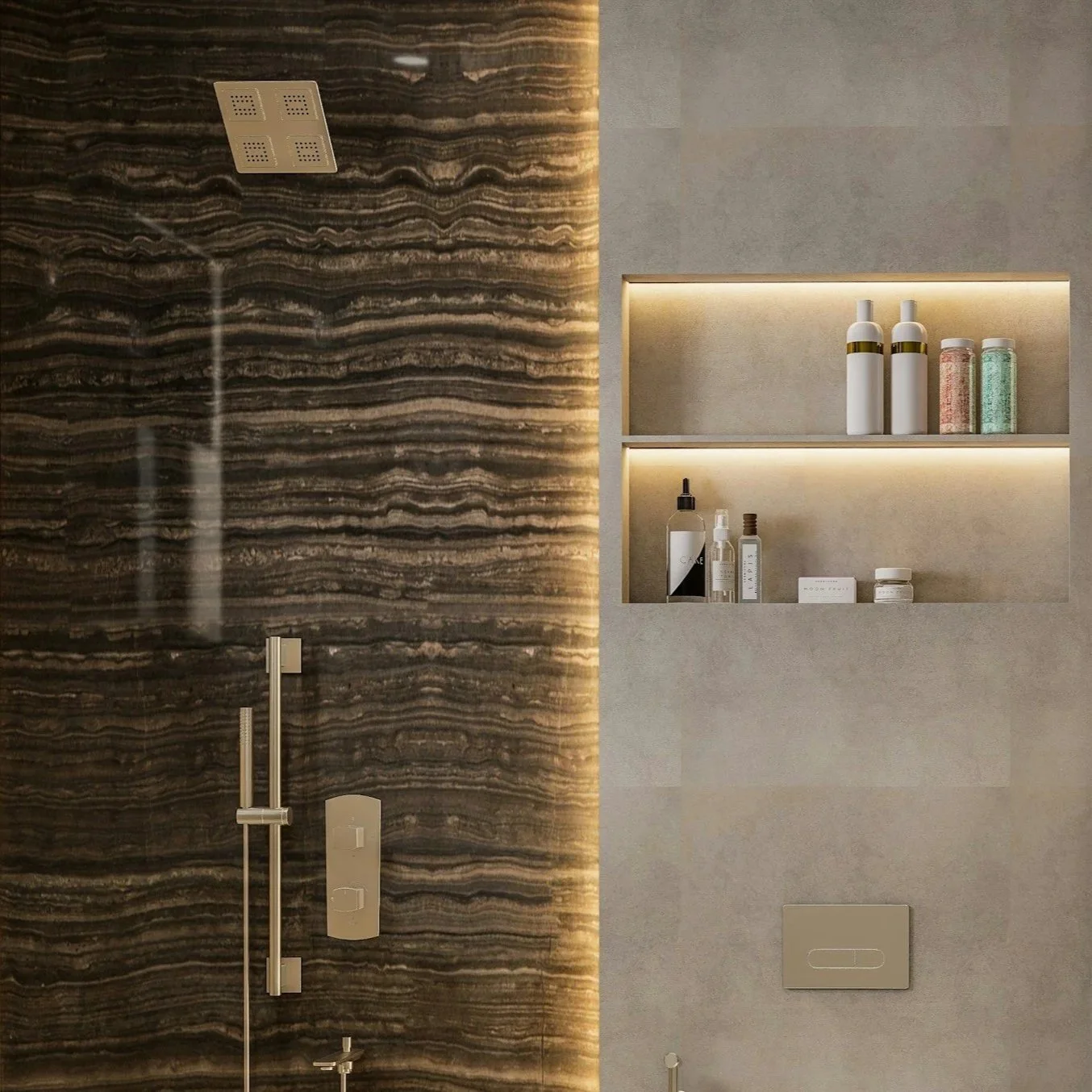
Whether it's illuminating a kitchen, defining a living room, or spotlighting artwork, recessed lighting adds depth, warmth, and elegance with a barely-there presence.
Recessed lighting has mastered the art of subtle sophistication. It brightens spaces without bulky fixtures, complements any design style, and delivers performance that outshines traditional lighting options. Whether it's illuminating a kitchen, defining a living room, or spotlighting artwork, recessed lighting adds depth, warmth, and elegance with a barely-there presence. Professional electricians specializing in lighting design and installation understand how to turn this understated fixture into a major design element—one that balances beauty, practicality, and energy efficiency in perfect harmony.
The Appeal Of Recessed Lighting
Recessed lighting, often called can lighting or downlighting, sits flush with the ceiling, leaving no dangling cords or visible hardware. Its minimal footprint makes it perfect for creating a clean, modern look in any space. It also works beautifully with low ceilings, where hanging fixtures might make the room feel smaller.
Professionals love recessed lighting for its versatility. It fits into nearly any design scheme, from minimalist to traditional, and works equally well as ambient, task, or accent lighting. Electricians use it to define spaces within open floor plans or to highlight textures such as stone walls, artwork, or wood finishes. The flexibility of placement and beam direction allows them to craft lighting scenes that feel both intentional and effortless.
Creating Layers With Light
A well-lit home isn't about brightness alone; it's about balance. Recessed lighting plays a key role in layered lighting design. It forms the foundation of ambient light, filling the room evenly and reducing harsh shadows. Professionals often pair recessed fixtures with pendants, sconces, or under-cabinet lights to create dimension and depth.
In kitchens, recessed lights provide general illumination while pendants handle focused tasks. In living rooms, they can replace bulky overhead fixtures, giving the space an airy, polished feel. Professionals specializing in lighting design and installation know how to combine recessed lights with other sources to achieve both visual comfort and design cohesion.
Choosing The Right Trim And Fixture
Recessed lighting might look simple, but the details matter. The trim—the visible part of the fixture—determines how the light interacts with the space. Baffle trims diffuse glare, making them ideal for living areas and bedrooms. Reflector trims amplify brightness in kitchens or bathrooms where strong illumination is needed. Adjustable trims let electricians aim light at specific focal points, perfect for highlighting art or architectural features.
Professionals help homeowners choose trims that match both functional needs and design goals. They also select fixtures with the correct size and spacing for the ceiling height. Proper placement avoids the "spotlight effect," keeping the light distribution even and natural.
Why Placement Makes All The Difference
Recessed lights look best when strategically placed rather than uniformly scattered. Electricians performing lighting design and installation calculate spacing based on beam angle, ceiling height, and desired brightness. Too few lights leave dark corners; too many can make the space feel clinical.
Professionals also consider what the light will hit, not just where it's installed. They use angled housings to direct light down a hallway, wash a wall with soft illumination, or highlight textured surfaces. Precision placement creates balanced brightness that feels seamless, natural, and intentional.
Energy Efficiency That Shines
Modern recessed lighting uses LED technology that consumes less energy and lasts significantly longer than incandescent or halogen bulbs. LEDs generate less heat, reducing strain on HVAC systems and lowering utility costs. They also offer consistent brightness and color temperature that don't fade over time.
Electricians specializing in lighting design and installation select LED fixtures with integrated drivers that maintain stable performance. Many models feature dimming or color-tuning capabilities, allowing greater customization of light intensity and tone. The result is energy-efficient illumination that feels luxurious and modern.
Making Small Spaces Feel Bigger
Recessed lighting has a remarkable ability to visually open up a room. Because the fixtures sit flush with the ceiling, they create the illusion of more height. By directing light downward, they draw the eye vertically and highlight architectural depth.
In hallways, bathrooms, or basements, where space is limited, recessed lighting prevents the cramped feeling caused by low-hanging fixtures. Electricians often use wide-beam recessed lights in these areas to distribute light evenly and enhance openness. Properly designed lighting can make even compact spaces feel airy, clean, and welcoming.
Highlighting Architectural Features
One of the most powerful uses of recessed lighting is to emphasize a room's best features. Whether it's a stone fireplace, built-in shelving, or a coffered ceiling, directional recessed fixtures create subtle contrast that brings textures and shapes to life.
Electricians install adjustable gimbal or eyeball trims that can be aimed precisely at the focal point. By layering different beam angles and intensities, they create depth and interest without overwhelming the space. The result feels natural—like the feature was designed to glow that way all along.
Recessed Lighting In Kitchens And Bathrooms
Kitchens and bathrooms benefit enormously from recessed lighting. Both rooms demand practical, shadow-free illumination. In kitchens, recessed lights can line the perimeter of the ceiling, evenly brightening countertops and prep areas. Electricians often combine them with under-cabinet lights to eliminate dark zones and improve visibility.
In bathrooms, recessed lighting creates a spa-like atmosphere while maintaining functionality. Professionals install moisture-rated fixtures designed to handle humidity. They also carefully consider placement, avoiding glare near mirrors and positioning lights to flatter the space without creating harsh shadows. The result is both relaxing and practical lighting that elevates the daily routine.
Recessed Lighting And Smart Home Integration
Modern homes are embracing smart lighting systems, and recessed fixtures integrate beautifully with that technology. Smart dimmers, color-tunable bulbs, and programmable lighting scenes give homeowners control at their fingertips—or through voice command.
Electricians performing lighting design and installation configure recessed systems to respond to time-based schedules, occupancy sensors, or mobile apps. Imagine walking into a softly lit living room in the evening or having hallway lights fade up gently in the morning. Smart recessed lighting adapts to daily routines effortlessly while improving efficiency and comfort.
Outdoor Applications For Recessed Lighting
Recessed lighting isn't limited to indoor ceilings. Professionals use weather-rated recessed fixtures outdoors to highlight soffits, porches, and walkways. These lights create a smooth wash of illumination that enhances curb appeal and improves safety without overpowering the landscape.
Electricians also install recessed step and deck lights that guide pathways elegantly after sunset. Subtle yet effective, these fixtures contribute to both aesthetics and functionality, making outdoor spaces feel like an extension of the home.
Avoiding Common Installation Mistakes
Recessed lighting looks simple, but installation requires precision. Incorrect spacing, poor insulation contact, or mismatched bulb types can cause flickering, overheating, or uneven illumination. Professionals handle every technical detail to make sure each fixture performs flawlessly and safely.
Electricians performing lighting design and installation use the correct housing type—IC-rated for insulation contact or airtight for energy efficiency. They balance circuit loads and confirm compatibility with dimmers to prevent performance issues. Their expertise delivers lighting that functions as perfectly as it looks.
The Beauty Of Subtlety
Recessed lighting proves that sometimes less is more. It draws attention not to itself, but to the beauty of the space it illuminates. It works quietly, creating ambiance without cluttering ceilings or competing with décor. That understated elegance makes it a favorite among homeowners and designers alike.
Electricians appreciate recessed lighting for its versatility, performance, and clean design. From modern kitchens to cozy bedrooms, it adapts seamlessly to any environment. Professional lighting design and installation turns those sleek, hidden fixtures into the secret ingredient behind a home's warm, inviting glow—proof that the best lighting often works its magic out of sight.
The Plug Electrical Services is a family-owned business with 18 years of experience. We have a team of licensed electricians for providing electrical panel upgrades, pool & spa wiring, EV charging station installation, outlet & switch installation, and home lighting solutions to homeowners in Odem, TX, and surrounding areas. We take pride in providing upfront estimates and ensuring clean communication. Call now to schedule a service.
