
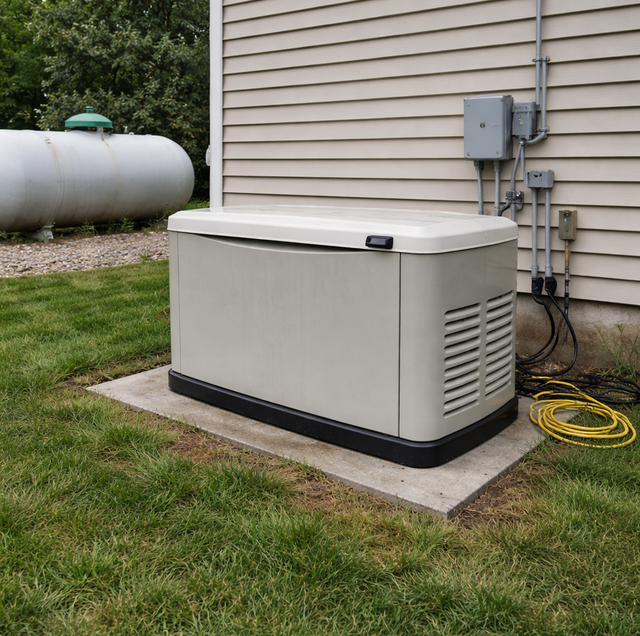
Quick Answer: A whole-house (standby) generator is permanently installed, runs on natural gas or propane, and starts automatically the moment power fails, powering the whole home or a chosen set of circuits with no refueling. A portable generator is a smaller unit you roll outside and start by hand, running on gasoline or propane to power a few appliances through a proper transfer switch or inlet. Standby wins on capacity, convenience, and being automatic; portable wins on simplicity and flexibility. Either way, connecting a generator to your home's wiring safely requires a transfer switch or interlock installed by a licensed electrician.
The power goes out, the refrigerator falls silent, and the question that has been sitting on your to-do list for months suddenly matters: standby generator or portable? Both put electricity back into your home when the grid fails, but they do it in very different ways and carry very different safety demands. Outages do not wait for a convenient season, so the right answer depends less on the weather and more on how much you need to keep running, how often you lose power, and how much you want to do by hand at 2 a.m.
The sections below walk through how each type actually works, then the factors that decide which one fits your home.
How Each Generator Powers Your Home
Understanding the wiring is what makes the comparison make sense.
A standby generator sits outside on a pad, wired permanently to your electrical panel through an automatic transfer switch. It is fueled by your existing natural gas line or a propane tank, so there is no fuel to pour. When the utility drops, the transfer switch senses the loss, isolates your home from the grid, and signals the generator to start, usually within seconds. When utility power returns, it switches back and shuts the generator down. You may be asleep the entire time.
A portable generator is a self-contained unit with its own small gas tank and a set of outlets on its face. It powers your home one of two ways: cords run directly from the generator to individual appliances, or, far better, a cord runs from the generator to a house inlet wired to a manual transfer switch. That switch lets you feed selected circuits, such as the furnace, fridge, and a few lights, from the panel itself instead of stringing cords through a cracked window. You start it, refuel it, and shut it off by hand.
The difference in daily experience is the difference between a home standby unit that behaves like an appliance and a portable that behaves like a tool you operate.
Standby Generator: Strengths and Trade-Offs
A permanently installed unit is built to carry a real load. Sized correctly, it can run the whole house, including central air conditioning, the well pump, and the electric range, or a prioritized bank of essential circuits if you choose a smaller model.
What you gain
- Automatic operation with no one home and no manual steps.
- No refueling, since it draws from a gas line or a large propane tank.
- Higher capacity, enough for major 240-volt appliances.
- Quieter, enclosed operation compared with an open-frame portable.
- A clean, code-compliant connection through the automatic transfer switch.
What you accept
- The largest, most involved installation of the two.
- A fixed location and a permanent tie into gas and the electrical panel, which is licensed-electrician and often permitted work.
- Routine maintenance, including oil changes and periodic self-test cycles.
A standby unit rewards homes that lose power often, that cannot tolerate a warm freezer or a dead sump pump, or where no one may be around to start a machine.
Portable Generator: Strengths and Trade-Offs
A portable is the accessible entry point, and for many homes it covers the essentials well.
What you gain
- A much simpler setup with no permanent installation.
- Flexibility, since the same unit can run a tailgate, a job site, or a camp.
- No permanent installation if you only ever use cords, though a house connection still needs proper wiring.
What you accept
- Manual everything: roll it out, start it, and shut it down yourself.
- Limited capacity, typically a handful of circuits rather than the whole home.
- Hands-on refueling every several hours during a long outage.
- More noise, and a running machine that lives outside in the weather.
- Fuel storage, since stored gasoline degrades and must be stabilized and rotated.
A portable suits homes with occasional short outages, a modest list of must-run devices, and an owner who is comfortable operating the equipment.
The Six Factors That Decide It
Weigh these against your own household rather than a generic recommendation.
1. How much you need to run: List the must-run loads. A furnace blower, refrigerator, and some lights point toward a well-chosen portable. Central air, a well pump, or an electric range pushes you into standby territory, because those 240-volt loads outstrip most portables.
2. How often outages happen: Rare, brief interruptions are easy to ride out with a portable. Frequent or long outages make the automatic, refuel-free standby far more livable.
3. Effort and involvement: A portable is simpler to buy and put into service but asks you to set it up and refuel by hand each time. A standby is a larger, permanent installation that then runs itself. Both need a safe house connection through a transfer switch or interlock.
4. Fuel access: A natural gas line makes standby especially convenient, since it never needs refilling. Without piped gas, you are choosing between a propane tank for a standby or hand-poured gasoline for a portable.
5. Noise and placement: An enclosed standby runs quieter and lives in a fixed spot. A portable is louder and must be positioned outdoors every time, well clear of the house.
6. Automatic versus manual: If power may fail while you are away, asleep, or unable to go outside, only a standby responds on its own. A portable does nothing until someone starts it.
Safety Comes Before Every Other Factor
This section is not optional reading. Generators produce two hazards that injure or kill people every year, and both are entirely preventable.
Carbon monoxide is the first killer: Never run one in a garage, breezeway, carport, or basement, even with the door open, because the gas pools and drifts back inside. Every home using any generator should have working carbon monoxide alarms on each level; they are the alarm that catches the mistake you did not know you were making.
A portable generator's exhaust contains carbon monoxide, a gas you cannot see or smell. Run a portable generator outdoors only, well away from windows, doors, and vents, and never in a garage, breezeway, carport, or basement, even with the door open. Fit working carbon monoxide alarms on every level of the home.
Backfeeding is the second killer: Never plug a generator into a wall outlet to power the house. That trick, called backfeeding, sends electricity backward through your wiring and out onto the utility lines, where it can electrocute a lineman working to restore power. It also bypasses your circuit protection and creates a fire and shock risk inside the home. The only safe way to connect any generator to your home's circuits is through a transfer switch or a panel interlock, which physically prevents your generator and the grid from ever being connected at the same time. That hardware is the whole point, and installing it is licensed-electrician work.
Refuel a portable only when it is off and cool: Gasoline splashed onto a hot engine can ignite. Shut the unit down, give it a few minutes, then refill.
Think of a transfer switch the way you would a drawbridge over a moat: it lets your home connect to one power source at a time and never both, so utility power and generator power can never meet on the same line. Without it, there is no barrier, and the danger flows in both directions.
Sizing and Installation
A generator that is too small trips and stalls under load; sizing starts with adding up the running watts of everything you intend to power, then accounting for the surge that motors, like a refrigerator compressor or well pump, draw the instant they start. That starting surge, not the running figure, is what determines the capacity you actually need, and it is the number homeowners most often underestimate.
Size a generator to the starting surge, not the running watts. Motors like a refrigerator compressor or well pump draw a brief surge the instant they start, and that surge, not the running figure, sets the capacity you actually need.
Whichever type you choose, the connection to your home is not a plug-and-play job. A standby unit ties into both the gas supply and the electrical panel. A portable needs an inlet box and a manual transfer switch or interlock wired into the panel. Both involve your service equipment, and both call for a licensed electrician, who sizes the unit to your real load, installs the transfer equipment correctly, and handles any permit and inspection your work requires.
Frequently Asked Questions
A standby unit on a natural gas line can run for days or weeks, limited mainly by scheduled maintenance rather than fuel, since the gas supply is continuous. Propane-fed models run until the tank empties. Most manufacturers still recommend a break for an oil check and cool-down during very long runs, so build that pause into your expectations for a multi-day outage.
Usually not. Central air conditioners are 240-volt loads with a high starting surge, and most household portables cannot supply it without stalling. Portables are better matched to 120-volt essentials such as the refrigerator, furnace blower, sump pump, and lighting. Cooling during an outage on a portable typically means a window unit or fans rather than the central system.
A natural-gas standby depends on the gas supply staying up, which it usually does during an electrical outage since the gas network runs on its own infrastructure. If gas service is interrupted, a natural-gas unit cannot run. Owners in areas where gas can be disrupted sometimes choose a propane model or keep a portable as a fuel-independent backup.
Standby units self-test automatically, typically for a few minutes each week, so the engine stays ready. A portable has no such routine, so run it under a light load for a few minutes every month or so and keep the fuel stabilized. A generator that sits untouched for a year is the one that will not start when you finally need it.
A lost circuit is a wiring problem, not a grid outage, and a generator is the wrong fix for it. Generators respond to a loss of utility power to the whole service, not to one dead outlet or a tripped breaker. A single circuit that keeps failing points to a breaker, connection, or device fault that an electrician should diagnose directly.
Often, yes. Because the connection ties into your electrical panel, and a standby also ties into the gas supply, this work commonly requires a permit and an inspection. Requirements vary by jurisdiction, and a licensed electrician pulls the correct permit and schedules the inspection as part of the job, which is one more reason this is not a do-it-yourself connection.
Ask about a generator setup sized to your home — get an automatic or portable-ready installation done safely and to code. The Plug Electrical Services serves Corpus Christi, Odem, and Portland. Call (361) 282-3058.
