
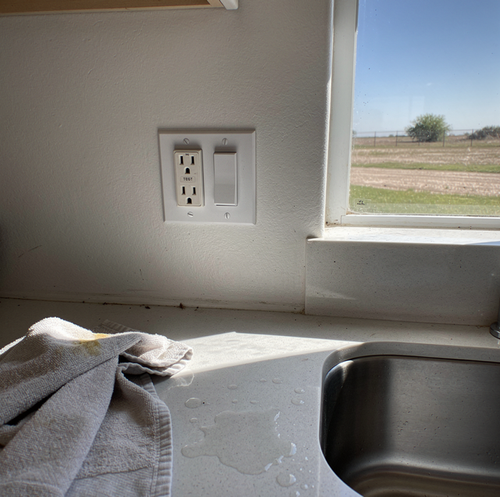
Quick Answer: A GFCI cuts power the instant it detects current leaking off the circuit toward the ground, often at only a few thousandths of an amp. Homes need this protection wherever an outlet sits near water: kitchen countertops, bathrooms, laundry and utility areas, garages, unfinished basements, crawlspaces, outdoors, and near pools, hot tubs, or wet bars.
You have probably plugged something into an outlet with two small buttons in the middle, one marked TEST and one marked RESET, and never given it a second thought. That outlet is a GFCI, short for ground-fault circuit interrupter, and its whole job is to protect the person touching the cord, not the wiring behind the wall. Understanding what it senses and where the electrical code puts it tells you a lot about how your house is trying to keep you safe.
What A GFCI Actually Senses
Electricity likes to travel in a complete loop. In a normal outlet, current flows out through the hot wire, does its work in whatever you plugged in, and returns through the neutral wire in equal measure. The amount going out and the amount coming back should match almost perfectly.
A GFCI watches that balance. Inside the device, both wires pass through a small sensing ring that compares the outgoing and returning current. If those two numbers ever drift apart, it means some of the current has found another path back to ground, and the most alarming possible path is through a person. When water bridges a live part, and your wet hand, your body becomes that leak.
The GFCI reacts to a mismatch as small as a few milliamps, a level far below what it takes to stop a heart but enough to hurt. When it sees that imbalance, it snaps the circuit open in a fraction of a second, usually faster than you can pull your hand away. Think of it like a lifeguard who is not watching for a big wave but for one swimmer drifting toward the drain. The moment one person strays from the group, the whistle blows, and everything stops.
That speed and sensitivity are why a GFCI protects people, while a regular breaker in your panel does not. A standard breaker only trips when the total current gets high enough to overheat the wire, which can be twenty amps or more. A person can be badly shocked long before a plain breaker ever notices anything is wrong.
Where Your Home Needs GFCI Protection
The pattern behind the code is simple once you see it: GFCIs belong wherever water and electricity can meet, plus anywhere the floor or ground gives you a direct path to earth. Modern electrical rules call for GFCI protection in these areas of a home.
Kitchens are near the top of the list, specifically the countertop outlets serving the space around the sink, where a coffee maker or a mixer sits inches from running water. Bathrooms need it at every receptacle, since sinks, tubs, and wet feet are constant. Laundry rooms and utility spaces qualify because of the water supply lines, drains, and damp concrete.
Garages, unfinished basements, and crawlspaces are covered, too. These spots combine bare concrete floors, tools, and often moisture, which is a risky mix for anyone kneeling on the ground while holding a plugged-in device. Every outdoor outlet needs GFCI protection, and so does any receptacle near a wet bar, pool, hot tub, or spa. The guiding idea is reach: if a standing person could touch the outlet and a water source at the same time, that outlet should be protected.
Living areas like bedrooms and hallways generally do not require GFCI outlets, because the shock risk there is lower. Those rooms have their own protection story, which comes up below.
Three Ways To Get The Protection
There is more than one device that delivers ground-fault protection, and the right choice depends on the circuit.
A GFCI receptacle is the familiar outlet with the two buttons. It protects itself and, when wired correctly, every ordinary outlet connected after it on the same circuit. This is the most common and flexible option for a single location or a short run of outlets.
A GFCI breaker lives in the electrical panel instead of the wall. It applies the same sensing to the entire circuit from the panel outward, so every outlet, light, and connection on that circuit gets protection. Electricians reach for a breaker when a whole run needs covering or when the first outlet would be awkward to access.
Both do the same fundamental job. The difference is scope and placement, not the underlying protection.
GFCI Versus AFCI Versus A Regular Breaker
These three devices are easy to confuse because they all interrupt power, but each guards against a different danger.
A GFCI stops shock. It watches for current leaking to ground and protects the person in contact with it.
An AFCI, or arc-fault circuit interrupter, stops fire. It listens for the specific electrical signature of arcing, the sputtering spark that happens when a wire is loose, pinched, or damaged inside a wall. Arcing throws enough heat to ignite framing and insulation, and an AFCI catches it before flames start. This is why living areas that do not need shock protection still need AFCI protection: the hazard there is a hidden fire, not a wet hand. Some spaces call for both kinds of protection, which combination devices can provide.
A regular breaker handles overload. It trips when too much current flows through the circuit, protecting the wire from overheating. It does nothing for a small ground leak or an arc, which is precisely the gap the other two devices fill.
Older Homes And Ungrounded Wiring
Plenty of houses were wired before grounding was standard, leaving two-prong outlets with no ground path at all. A common assumption is that these homes cannot have shock protection without a full rewire. That is not the case.
Because a GFCI senses the imbalance between hot and neutral rather than relying on the ground wire, it can be installed on an ungrounded circuit and still protect a person from shock. When an electrician does this, the outlet gets a small label reading "No Equipment Ground." That label is honest: the device does not create a true ground, and it will not protect sensitive electronics the way grounding does. What it does provide is the life-safety piece, cutting power the moment current tries to pass through someone. For many older homes, that upgrade is a meaningful safety gain without opening every wall.
Testing And The Moisture Factor
A GFCI is a mechanical and electronic device, and like anything with moving parts it can wear out or fail silently. That is what the TEST button is for. Press it about once a month; the device should trip and cut power on the spot. Press RESET to restore it. A GFCI that will not trip on TEST, or will not reset afterward, has failed and should be replaced by a licensed electrician.
The environment matters for how hard these devices work. A humid, salt-laden coastal setting keeps outdoor and garage outlets damp far more of the year than a dry inland climate would, and salt air is corrosive to metal contacts. That is a reason to take outdoor GFCI testing seriously. At the same time, moisture is a year-round issue everywhere, from a summer downpour to condensation on a cool basement wall in any season, so no home should treat GFCI protection as a fair-weather concern.
One safety note runs through all of this. Testing a GFCI with its own button is a homeowner's task. Installing GFCI receptacles, adding GFCI breakers, or touching anything inside the electrical panel is not. Panel and circuit work carries a real shock and fire risk and should be left to a licensed electrician who can confirm the wiring is correct and the protection actually works.
Frequently Asked Questions
The trigger is proximity to water, not the room name on its own. A kitchen outlet within a couple of feet of the sink needs protection, while one across the same room may not, and a fixed appliance receptacle for a refrigerator or dishwasher is handled based on the setup rather than a blanket rule. That gray zone is exactly where an electrician reads the specifics of your layout instead of guessing. The general pattern still holds: the closer an outlet sits to a water source, the more likely it needs the protection.
The breaker version protects more than the outlets: it guards the wiring inside the wall from the panel outward, not just the plug points, so a fault anywhere on that run is caught. That makes it the usual choice where several outdoor or wet-location outlets share one circuit, since a single device at the panel covers all of them at once. A receptacle, by contrast, starts its protection at that outlet and passes it downstream. The pick comes down to how much of the circuit needs covering and how reachable the first outlet would be.
A GFCI stops shock by catching current leaking to ground, while an AFCI catches the sputtering spark of a loose or damaged connection before it can start a fire. Where a circuit needs both at once, many panels now use a dual-function, or combination, breaker that provides GFCI shock protection and AFCI arc-fault protection on the same device. That single unit is common in spaces that fall under both requirements, so you are not stacking two separate devices to get there.
Yes, and the device gives real shock protection even without a ground wire. The catch worth knowing is that a surge protector plugged into that outlet still has no true ground path, GFCI or not, so it cannot do its job the way it would on a grounded circuit. Sensitive electronics that rely on grounding still need a properly grounded circuit run to them. The outlet itself is labeled "No Equipment Ground," so the next person who opens it knows the ground is missing.
Use the device's own TEST button, not a plug-in tester. A three-light plug-in tester will not reliably trip a GFCI on ungrounded wiring and may simply read "open ground," so it cannot confirm the protection works there. Pressing the built-in TEST button should cut power and pop the RESET out, which is a trustworthy check. And if the RESET will not hold or the outlet chatters, that points to a real fault downstream on the circuit rather than a worn-out button.
It can, when the other outlets are wired downstream of it. A single GFCI receptacle at the start of a circuit can protect several plain-looking outlets that come after it. That is why a bathroom or garage may have one outlet with TEST and RESET buttons and several ordinary-looking ones that are still fully protected.
Schedule a home GFCI safety check with a licensed electrician — know exactly which outlets protect your family and which ones need an upgrade. The Plug Electrical Services serves Corpus Christi, Odem, and Portland. Call (361) 282-3058.
