
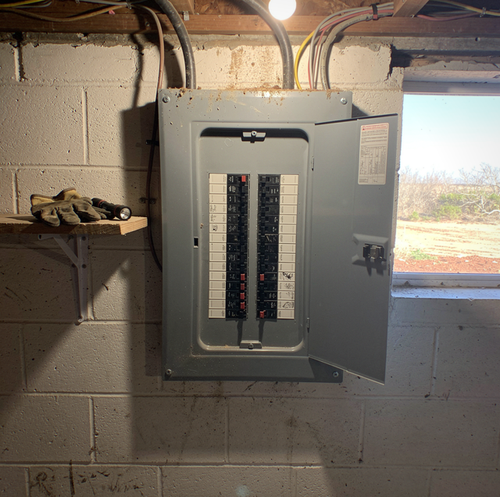
A breaker that trips once and stays reset is usually nothing. A breaker that trips again and again is a different story, and it is worth understanding what is actually happening inside that panel before you go hunting for the switch a fourth time.
Here is the part most people get backward: a breaker tripping is not a malfunction. It is the breaker working exactly as designed. That switch exists to cut power the instant the wiring behind it is asked to carry more current than it can safely handle. When it keeps tripping, it is not broken. It is protecting the wire in your walls from overheating, and it is telling you that something on that circuit needs your attention.
The useful skill is decoding that message. The same tripped switch can mean three very different things, and the difference matters because the safe response to each one is not the same.
Quick Answer: Breakers keep tripping for three main reasons: an overload (too many devices pulling more current than the circuit is rated for), a short circuit (a hot wire touching a neutral or ground), or a ground fault or arc detected by a GFCI or AFCI device. The timing tells you which: overloads trip after a delay under heavy load, shorts trip the instant you reset. If a breaker trips right back with any heat, buzzing, or burning smell, stop resetting it and call a licensed electrician.
What a Tripping Breaker Is Actually Doing
Every branch circuit in your home runs on a wire sized for a specific amount of current. A common 15-amp circuit uses thinner wire than a 20-amp one, and the breaker on each is matched to protect that particular wire. When current climbs past what the wire can carry, the wire starts to heat up. Left unchecked, that heat is what starts fires inside walls. The breaker's whole job is to sense that overload and snap the circuit open before the wire ever gets there.
So a breaker doing its job repeatedly is a signal, not a defect. The useful question is not "how do I make it stop tripping" but "why does it keep needing to?" There are five common answers, and the first three cover the vast majority of calls.
Overload: too much on one circuit
An overload is the most common cause and the least alarming. It happens when the devices running on a single circuit add up to more current than the breaker is rated for. Run a space heater, a microwave, and a hair dryer on the same kitchen circuit, and you can push a 15- or 20-amp breaker past its limit.
An overload announces itself with a delay. The breaker holds for a bit while the circuit works hard, then trips once the combined draw stays too high for too long. You will often notice it happens right when you switch on that one last device. The fix is a redistribution problem, not a repair: move some of those loads to a different circuit, or have a dedicated circuit added for the appliance that keeps pushing things over the edge.
Short circuit: an instant, hard fault
A short circuit is a different animal. This is a hot wire making direct contact with a neutral or a ground wire, which lets a huge surge of current flow in an instant. The breaker responds just as fast, tripping the moment that contact happens.
Speed is the giveaway here. A short trips instantly, often the second you push the breaker back on. The cause is usually a physical fault: a damaged extension cord, an appliance that has failed internally, or a wiring problem inside a wall or device. A short is not something to keep testing by resetting. Unplug suspect cords and appliances, and if the breaker still snaps off the instant it is reset with nothing plugged in, the fault is in the wiring and belongs to an electrician.
Ground fault and arc faults: the specialized breakers
Two kinds of protective devices trip on things a standard breaker ignores. A GFCI, the kind you find on outlets near sinks, tubs, and outdoor spigots, watches for current leaking off the intended path toward ground, which is what happens when electricity finds a person or water. It reacts to a tiny imbalance, far smaller than any overload, because its job is to prevent shock rather than to protect the wire.
An AFCI breaker listens for the electrical signature of arcing, the sputtering discharge that a loose terminal or a nicked wire produces. Arcing can generate serious heat without ever drawing enough current to trip a normal breaker, so the AFCI catches a hazard the ordinary breaker would miss. When one of these trips flags a specific condition in a specific place, it is useful diagnostic information.
A worn breaker: sometimes the switch itself
Breakers are mechanical. The internal parts that sense heat and snap the contacts open wear out over thousands of trips and many years of use. An aging breaker can begin tripping below its rated current, cutting power when nothing on the circuit is actually drawing too much. This is less common than the causes above, but a breaker that nuisance-trips with a light, obviously-under-capacity load is a candidate for replacement by a professional.
How to Read the Pattern Yourself
You can learn a lot before anyone touches the panel, just by paying attention to when and how the breaker trips.
- Trips only when one specific appliance runs- The problem lies with that appliance or its circuit. Something about that device is either drawing too much or has developed a fault.
- Trips when you add one more device to a busy circuit- Classic overload. The circuit was near its limit, and the last load pushed it over.
- Trips instantly, every single time you reset it- That behavior belongs to a short circuit or a hard-wiring fault. The current has a direct path it should not have.
- Trips at a GFCI outlet near water, or at an AFCI breaker- The specialized device is doing its separate job, catching leakage to ground or an arcing connection rather than a simple overload.
Reading the timing is the single most useful thing you can do. Delay under heavy load points to overload. An instant trip points to a short. A trip at a GFCI or AFCI point indicates leakage or arcing. Those three timings sort most problems into the right bucket.
What You Can Safely Do, and Where to Stop
Some of this is squarely homeowner territory. If a breaker trips, you can go to the panel and reset it once. Before you do, look at the circuit: unplug things, note what was running when it tripped, and think about whether that circuit was simply carrying too much. Redistributing loads across different outlets and circuits solves a large share of overload trips. If a specific cord or appliance is the culprit, replacing the damaged cord or retiring the failed appliance often ends it.
What you should not do is force a breaker back on over and over. Each reset onto a live fault dumps current into wiring that may already be heating, and repeated resets can turn a contained problem into a real hazard. A breaker that will not stay set is not asking to be pushed harder. It is asking you to stop.
Stop and call a licensed electrician right away if any of these show up:
- The breaker trips again immediately, every time you reset it.
- You notice a burning or acrid smell anywhere near the panel or an outlet.
- There is scorching, discoloration, or melted plastic on a breaker, outlet, or plug.
- The breaker, the panel cover, or an outlet feels warm or hot to the touch.
- You hear buzzing, sizzling, or crackling from the panel or a receptacle.
Repeated trips paired with heat or smell are not an inconvenience. They are the warning signs of wiring that is failing, and they mean the protective device is the only thing standing between you and a fire. That is not a moment to keep resetting.
One more firm line: the panel itself is not a DIY zone. The main panel carries lethal voltage on parts that stay live even when individual breakers are off, and diagnosing or replacing anything inside it is licensed electrician work. Reading the pattern and managing what is plugged in is yours to do. Opening the panel is not.
Frequently Asked Questions
Beyond the timing, the feel and the repeatability separate them. An overload trip often follows a warm breaker and a heavy-use pattern you can predict, the kettle plus the toaster at breakfast, say. A short trips cold and instantly, but it can also come and go: a wire chafing inside a cable can short only when something moves, so a trip that appears when you jostle a cord, an appliance, or a spot on the wall points to a damaged cable rather than a simple overload.
That points to one of two things: the appliance itself is faulty, or the circuit is being overloaded by the appliance's draw. You can tell them apart with a simple test. Plug the appliance into an outlet on a completely different circuit and run it. If it trips that breaker too, the appliance is the problem and needs repair or replacement. If it runs fine there, the original circuit was overloaded and the load needs redistributing.
No. Treat a single reset as the limit: remove the loads, reset once, and if it will not hold, stop there. Repeated resets onto a fault heat the wire each time, and they also wear the breaker's own internal trip mechanism, which can eventually stick or drift so it no longer cuts power reliably when you actually need it to. Add any warmth, buzzing, or burning smell, and the answer is the same: stop and call. A breaker that will not stay set is a stop-and-call sign, not a stubborn switch to muscle back into place.
They protect different things. A GFCI trips on a very small amount of current leaking to ground, on the order of a few thousandths of an amp, because its purpose is to protect a person from shock in a wet area. A standard breaker trips on a much larger overload or short and exists to protect the wiring, not a person. So a receptacle that keeps tripping near a sink or outdoors is usually the GFCI doing its separate, shock-prevention job, and it often has its own test and reset buttons right on the outlet.
Two quiet culprits explain most mystery trips. First, a breaker wears out over thousands of trips and years of service, and an aging one can begin tripping below its rated current with nothing actually overloaded. Second, an AFCI breaker may be sensing the arcing of a loose or damaged connection somewhere on the circuit, a hazard that produces heat but not enough current draw to look like an overload. A nuisance trip with nothing obviously plugged in is worth an electrician's look for exactly these reasons.
Very much. The rating is matched to the thickness of the wire behind it: a 15-amp breaker protects thinner wire than a 20-amp breaker, and each is chosen to cut power before its particular wire overheats. That is why you can never just swap in a larger breaker to stop the tripping. A bigger breaker on a wire sized for a smaller one would let that thinner wire carry more current than it can handle, which is precisely the overheating and fire the breaker was installed to prevent.
Book a panel and circuit inspection — pinpoint the fault so your power stays on and your wiring stays safe. The Plug Electrical Services serves Corpus Christi, Odem, and Portland. Call (361) 282-3058.
